Executive Summary
- Grid connection success depends less on the application form itself and more on the technical maturity of the project at the moment of submission.
- A credible grid approach requires a defined demand profile, realistic operating cases, preliminary single-line architecture, fault-level assumptions, protection philosophy and clear responsibility for interfaces between owner, EPC, OEM and utility.
- Projects that move too early into the grid-operator process often create avoidable loops: revised power demand, changed transformer sizing, reworked protection concepts, delayed studies and repeated clarification rounds.
- The purpose of readiness engineering is therefore to freeze the minimum decision basis before external engagement, reduce uncertainty and shorten the route from concept to grid approval.
Key Figures
Decision Gates6
Core Data Sets12+
Critical Interfaces8
Typical Study ScopeLoad flow · Short-circuit · Protection
Technical Figure
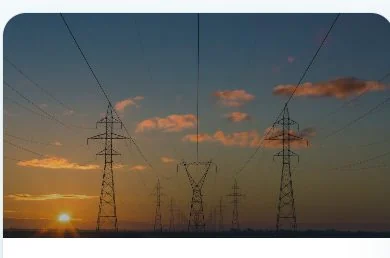 Figure 1. Example visual context for grid-connection readiness: the substation environment, operating boundary conditions and field interface perspective must be defined before formal utility engagement.
Technical Discussion
Why readiness matters
For complex electrical infrastructure, the grid operator evaluates not only the requested connection capacity but also the credibility of the technical concept behind it. A project with undefined operating scenarios or unstable assumptions can neither be assessed efficiently nor transferred reliably into later engineering phases.
Minimum engineering basis before utility engagement
The minimum package should include preliminary load breakdown, normal and contingency operating states, estimated short-circuit power, transformer and switchgear concept, reactive-power assumptions, protection boundaries, metering concept and interface allocation. This baseline allows the connection request to be technically coherent.
Typical failure modes
Common failure patterns are moving load assumptions, uncoordinated OEM inputs, missing fault-level checks, no defined energization concept, incomplete site constraints and undefined responsibilities for utility interfaces. These issues appear small at concept stage but typically expand into approval delay, cost increase and redesign.
Recommended delivery logic
A practical delivery model starts with readiness assessment, continues with concept engineering and study preparation, then converts the agreed basis into utility communication packages, tender requirements and implementation constraints. This sequence creates continuity from first concept to execution.
Figure Captions
References / Standards
IEC 60909 — Short-circuit currents in three-phase AC systems
IEC 61936-1 — Power installations exceeding 1 kV AC and 1.5 kV DC
IEC 60076 series — Power transformers
IEC 62271 series — High-voltage switchgear and controlgear
VDE-AR-N 4110 / 4120 / 4130 — German grid-connection rules for MV / HV / EHV customers
EN 50160 — Voltage characteristics of electricity supplied by public distribution systems
Note: Project-specific utility, client and local regulatory requirements must always be added to the standards baseline.
Recommended iGRANEX Packages
iGRAGrid AssessmentFast structured review of connection maturity, study readiness, utility-interface assumptions and concept gaps.
iGRAEnergy ReadinessDefines technical baseline, operating cases, network assumptions and the decision basis required for formal grid engagement.
iGRAProject ControlSupports alignment between developer, OEMs, EPC partners and utility milestones during the approval phase.
The page is optimized for print and Save-as-PDF output for a whitepaper-style technical brief.